Play Hearts Online - Free
Classic Hearts against three smart AI opponents, plus the one thing most Hearts sites lack: race a friend live in real-time multiplayer. No download, no signup.Hearts.now is a free online Hearts site with four ways to play - classic Hearts, Omnibus, Spot Hearts and Black Maria - a shared daily challenge, and real-time multiplayer that lets you and a friend race the identical deal. There's nothing to download and no account required: just deal and play below against West, North and East.
How to Play Hearts
In a nutshell: The classic trick-taking game - Dodge the queen, duck the hearts, lowest score wins. You play with 1 deck (52 cards), it's rated easy to learn, hard to master, and a strong player averages under 5 points a hand.
Hearts is the world's favorite trick-avoidance card game. Four players, 52 cards, 13 tricks - and the goal is to score as few points as possible. Every heart you capture costs 1 point and the queen of spades costs 13, so the real skill lies in losing tricks on purpose. Before each hand you pass three cards to an opponent, the 2 of clubs leads off, and hearts can't be led until someone has broken them. Reach 100 points and the game ends - lowest total wins. Beneath the simple rules hides real depth: what you pass, when you take a safe trick, and whether you dare to shoot the moon - capturing every penalty card to hand 26 points to each opponent - separate casual players from sharks. Here you face three smart AI opponents, with classic rotating passes or a No Passing mode that plays every hand exactly as dealt.
Hearts at a glance
| Goal | The classic trick-taking game - Dodge the queen, duck the hearts, lowest score wins. |
|---|---|
| Decks used | 1 standard 52-card deck - 52 cards in play |
| Difficulty | Easy to learn, hard to master |
| The stakes | A strong player averages under 5 points a hand |
| Play modes | Pass & Play, No Passing |
| Family | Classic |
Step by step
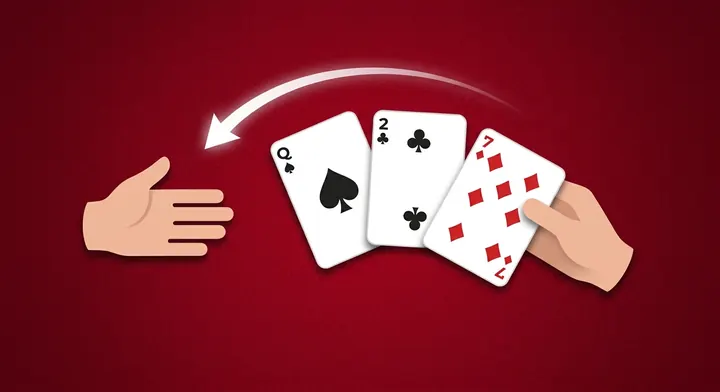
Pass three cards
Before each hand, choose three cards to pass face down - to the left, then right, then across, then a hold hand with no pass. In No Passing mode you skip this step and play the cards you are dealt.
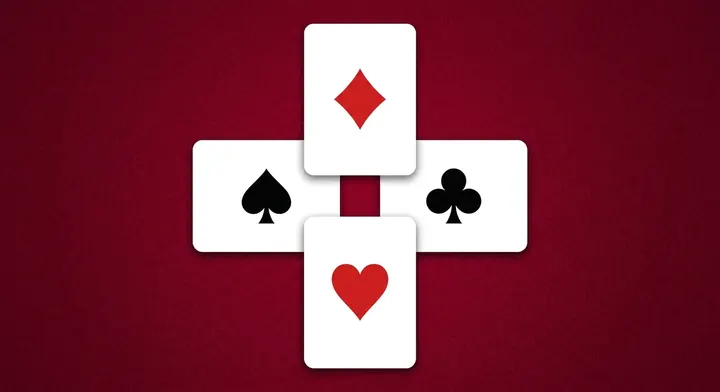
Follow the lead suit
The player holding the 2 of clubs leads it to start the first trick. You must follow suit whenever you can; if you are out of the led suit you may throw any card, except that no penalty card may be played on the first trick.
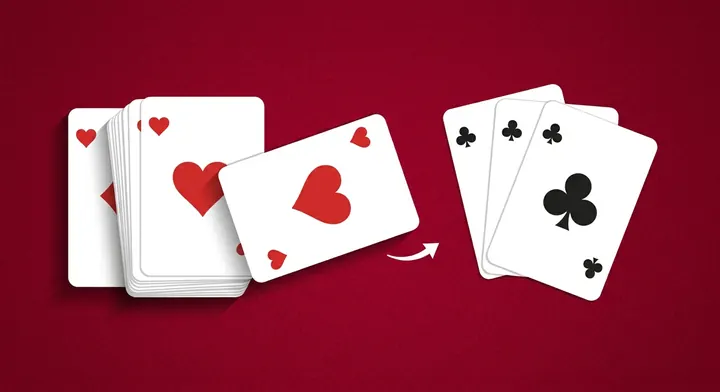
Breaking hearts
Hearts can't be led until someone discards a heart on another suit's trick - that breaks hearts. The only exception is a hand holding nothing but hearts.
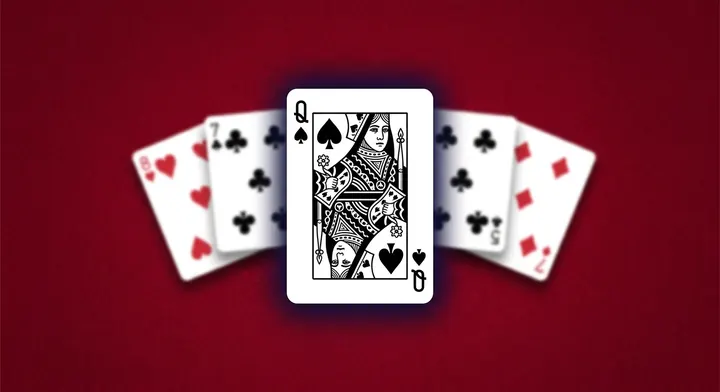
Dodge the queen of spades
The highest card of the led suit wins the trick and its penalty cards - there is no trump. Each heart costs 1 point and the queen of spades costs 13, so losing tricks is usually winning.
Scoring and winning
After 13 tricks, everyone adds up their penalty points. Capture all 26 in one hand to shoot the moon: you score zero and each opponent takes 26. The game ends when someone reaches 100 points, and the lowest total wins.
History of Hearts
Hearts descends from the Reversis family of trick-avoidance games that were fashionable in Europe from the seventeenth century, when French players made Reversis a salon favorite. The idea those games introduced - that winning tricks could cost you points instead of earning them - is the seed of everything in the modern game.
Modern Hearts took shape in the United States in the 1880s as a simple game in which each captured heart cost one point. Early rulebooks called that bare version plain Hearts, and in the early 1900s American players added the queen of spades as a 13-point penalty, creating the game the books call Black Lady. That version, with rotating passes and shooting the moon, became the standard game most people now simply call Hearts.
Software sealed its fame. Microsoft shipped a networked Hearts game with Windows in 1992, and it stayed bundled with the operating system for two decades, teaching millions of office workers and students the game between tasks. Online play carried it further, and today Hearts sits alongside Spades and Bridge as one of the most played trick-taking games in the world.
How to Win Hearts: Strategy
💡 Top tip: Pass your three biggest liabilities, not just your highest cards - an ace or king of spades with no low spades behind it is the most dangerous holding in the game.
Winning tips, in order of importance
- Try to empty a whole suit when you pass, so you can dump the queen of spades or a big heart the first time that suit is led.
- Lead your safe low cards early, while everyone still has to follow suit - the opening tricks are the cheapest time to be caught winning.
- Count spades. Until the queen falls, never lead the ace or king of spades, and treat every spade trick as a possible trap.
- Keep one or two tiny hearts as escape cards so you can duck heart tricks in the late hand.
- Watch which suits each opponent stops following - a player with a void will drop penalty cards on that suit every time it is led.
- Spend your dangerous middle cards - queens, jacks and tens - on tricks that are already lost, rather than saving them for the endgame where they win everything.
Advanced tactics for Hearts
- Flush the queen on your terms: with a long, low spade suit, lead spades again and again - whoever holds the queen must eventually play her, and your small cards never win the trick.
- Keeping the queen can beat passing her: with three or more low spades for cover, holding the queen lets you choose exactly which opponent takes her 13 points.
- Play second hand low and fourth hand cheap: when a trick is already lost, slide in just under the winning card, and when you must win, win with the smallest card that does the job.
- Read the pass you receive: three high cards from a neighbor usually means they kept a short, running hand - raise your guard against a moon.
- Break up a moon early: the cheapest insurance is taking one small heart the moment a single player starts winning every trick with big cards.
- Plan your last three tricks before they arrive: count which hearts and high cards are still out, and make sure you hold at least one card that can lose in some suit.
- Aim the queen with intent: when you finally throw her, prefer the opponent whose score threatens you most - in a close game, 13 points is a weapon, not just an escape.
Common Hearts mistakes to avoid
- Passing three random high cards without a plan - pass to create a void in one suit instead, so you can dump dangerous cards the moment that suit is led.
- Keeping the ace and king of spades with only two or three spades behind them - they will catch the queen sooner or later, so pass them unless you hold four or more spades.
- Leading hearts the moment they break - a mid heart lead often wins the trick and the points, so lead your lowest heart or a safe off-suit card instead.
- Forgetting the queen is still out - count the spades as they fall, and never win a late spade trick with a high card while she is loose.
Hearts Variations
No Passing
Every hand is played exactly as dealt, removing the opening safety valve - dangerous holdings can't be shipped away, so ducking skills and card counting matter even more. It is available as a mode right here.
Omnibus Hearts
Adds the jack of diamonds as a minus-10 bonus card, giving players one trick each hand that is actually worth fighting to win. Playable on Hearts.now as its own game.
Black Maria
The British version: the ace and king of spades join the queen as penalty cards for 43 points a hand, and everyone passes three cards to the right before every deal.
Cancellation Hearts
A version for five or more players using two decks shuffled together. When two identical cards land on the same trick they cancel each other and can't win it, producing wild, unpredictable hands.
Partnership Hearts
Four players form two teams sitting across from each other and combine their scores. Helping a partner duck or shoot adds a cooperative layer the cutthroat game lacks.
Hearts FAQ
What are the rules of Hearts?
Four players get 13 cards each, pass three cards, and play 13 tricks. You must follow the led suit if you can, the highest card of that suit wins the trick, and every heart you capture costs 1 point while the queen of spades costs 13. The lowest score when someone reaches 100 wins the game.
Who goes first in Hearts?
Whoever holds the 2 of clubs leads it to open the first trick - the lead is never a choice on trick one. After that, the winner of each trick leads the next.
When can you lead hearts?
Only after hearts are broken, which happens the first time a player discards a heart on a trick of another suit. The one exception is when your hand holds nothing but hearts, in which case you may lead one anyway.
Can you play the queen of spades on the first trick?
No. No penalty cards - no hearts and not the queen of spades - may be played on the first trick, unless a player's hand is nothing but penalty cards. From trick two onward the queen can fall at any time.
What is shooting the moon in Hearts?
Capturing all 13 hearts plus the queen of spades in a single hand. Instead of taking 26 points, you score zero and each opponent is hit with 26 - the biggest single swing in the game.
How does passing work in Hearts?
Before each hand you choose three cards and pass them face down: to the left on the first hand, then right, then across, then a hold hand with no passing. The cycle then repeats. Our No Passing mode skips passing entirely.
Is there a trump suit in Hearts?
No. The highest card of the suit that was led wins every trick, and cards of other suits can never win it. That is why being unable to follow suit is powerful - you can safely dump your worst cards.
How do you win at Hearts?
By scoring the fewest points. Pass your dangerous cards wisely, follow low, count the spades above the queen, keep escape cards for the late tricks, and know when a moon attempt is worth the gamble.
Is Hearts a game of skill or luck?
The deal brings luck, but skill dominates over a full game. Passing choices, card counting, reading voids and timing your exits swing far more points than the shuffle does, which is why the same players keep winning.
How many points is each card worth in Hearts?
Each of the 13 hearts is worth 1 penalty point and the queen of spades is worth 13, for 26 points per hand. Every other card - including the ace of spades - is worth nothing in the classic game.
When does a game of Hearts end?
The game ends at the close of the hand in which any player reaches or passes 100 points. The player with the lowest total at that moment wins.
What is the No Passing variant?
A mode where every hand is played exactly as dealt, with no card passing. It removes the safety valve of shipping dangerous cards away, so card play and counting matter even more. You can select it on the Hearts table here.
Still have a question about Hearts? Browse the full Hearts FAQ, look up a term like trick or breaking hearts in the Hearts glossary, or compare Hearts with the other variants in the rules for every Hearts game.
Last updated .
More Hearts Games
Why Hearts.now?
Hearts.now is built for people who actually play: instant deals, smooth card play, and three AI opponents - West, North and East - that pass with a plan, duck dangerous tricks, and hunt the Queen of Spades just like human players do. Your per-game statistics live in your browser. Every big variant is here - Omnibus Hearts, Spot Hearts and Black Maria - plus something almost no Hearts site has: real online multiplayer, where you and a friend race the exact same deal on different devices. Browse the full list of free Hearts games, or check the Hearts FAQ if you're new to the game.
Want to learn the game properly first? Read the full Hearts rules, look up any term in the Hearts glossary, or grab our printable Hearts rules and score sheet for your next family game night.
Common questions about Hearts.now
Is Hearts.now free?
Yes. Classic Hearts and every variant, the daily challenge, the leaderboard and head-to-head multiplayer are free to play in your browser, with no download and no signup. An optional Google sign-in only adds cross-device stat syncing.
Do I need to download or install anything?
No. Hearts.now runs entirely in your web browser on desktop, tablet and phone. You can add it to your home screen so it opens like an app, but there is nothing to install and nothing to update.
Is Hearts.now safe to use?
Yes. The site uses HTTPS, never sells personal data, and lets you play everything as a guest. Your games and stats are saved in your own browser unless you choose to sign in and sync them across devices.
What makes Hearts.now different from other Hearts sites?
Two things: real-time head-to-head multiplayer races, where you and a friend play the identical deal against identical AI opponents and the lower score wins, and a shared daily deal that ranks every player in the world on the same hand.
Who made Hearts.now?
Hearts.now is an independent, ad-light free Hearts site built for people who actually play. You can read more on the About page and reach the team through the contact form.
Types of Hearts
"Hearts" isn't just one game - it's a small family of trick-taking games that all share the same heartbeat: four players, thirteen tricks, and points you do not want. Every variant deals the full 52-card deck, makes you follow suit, and punishes you for winning tricks that hold penalty cards. What changes between variants is what the cards are worth. The classic game keeps it simple: each heart costs 1 point and the Queen of Spades costs 13, for 26 points a hand. The point variants keep the classic flow but rewire the scoring - Omnibus adds a jack worth minus 10 that everyone suddenly wants, while Spot Hearts makes every heart count its pip value, so an Ace of hearts stings far more than a deuce. The regional variants show how the game grew up in other places - Black Maria, the British version, turns the top three spades into penalty cards and always passes to the right. Knowing which group a variant belongs to tells you right away how it will feel: steady and familiar, swingy and mathematical, or tense from the very first spade lead.
Classic
The classic game is the one most people learned at a kitchen table or on an office PC: hearts are worth 1 point each, the Queen of Spades is worth 13, and the lowest score wins when someone reaches 100. Play it with the traditional pass (left, right, across, hold) or switch to No Passing and play the cards exactly as they're dealt.
- Hearts - The classic trick-taking game - Dodge the queen, duck the hearts, lowest score wins. Hearts is the world's favorite trick-avoidance card game. (Easy to learn, hard to master.)
Point Variants
Point variants keep the classic rules of play - passing, following suit, breaking hearts - but change what the cards are worth. A single scoring tweak reshapes the whole game: a bonus card gives you something to chase instead of only things to dodge, and pip-value hearts make every single trick a different size of risk.
- Omnibus Hearts - Classic Hearts plus a prize - Capture the jack of diamonds for minus 10. Omnibus Hearts takes everything you know about classic Hearts and adds one glittering exception: the jack of diamonds is worth minus 10 points to whoever captures it. (Adds a reward to chase.)
- Spot Hearts - Every heart counts its pips - Bigger points, bigger blunders, bigger comebacks. Spot Hearts turns the volume up on every heart in the deck. (High stakes, big swings.)
Regional Variants
Regional variants are how Hearts is played in other parts of the world. Black Maria, the British branch of the family, adds the Ace and King of Spades to the penalty list and always passes three cards to the right - so every hand starts with a little gift of trouble for your neighbor.
- Black Maria - The British cousin - The ace and king of spades hurt too. Black Maria is the British branch of the Hearts family, named for its most feared card: the queen of spades. (The harshest spades.)
Which Hearts variant should I play?
Not sure where to start? Match the game to your mood:
New to Hearts
Begin with classic Hearts. If the passing decisions feel like a lot at first, switch to No Passing mode and just play the cards you're dealt - the core game is exactly the same.
Something to chase, not just dodge
Play Omnibus Hearts. The Jack of Diamonds is worth minus 10 points, so every hand has a prize as well as penalties - and a whole extra layer of decisions about when to grab it.
Big swings and card counting
Try Spot Hearts. Every heart counts its pip value and the Queen of Spades costs 25, so a single hand can swing 129 points. Knowing which hearts are still out there really matters.
The toughest challenge
If you want to sweat every spade, play Black Maria - the British version where the Ace, King and Queen of Spades are all penalty cards, for 43 points a hand, and you always pass three cards to the right.
Play with a friend
Hearts is better with rivals. Jump into online multiplayer and race a friend head-to-head: same deal, same AI opponents, fewest points wins.
Ready to dig deeper? Our complete rules hub explains every variant above in full - passing, breaking hearts, scoring and strategy - and if you'd rather test your skills against everyone else, take on today's daily challenge, a single shared deal that resets at midnight UTC.